On September 19, 2026, the 2026 Iron-based Shape Memory Alloy (Fe-SMA) Material and Its Application in Engineering Construction Theme Salon was successfully held in Nanjing. The salon was co-hosted by the National and Local Joint Engineering Research Center for Smart Construction and Operation and Maintenance at Southeast University, among other units, with the journal "Modern Transportation and Metallurgical Materials" providing academic and dissemination support as a co-organizer. More than 100 experts and scholars from universities, research institutes, engineering design, and application units attended the event, while overseas scholars from Germany, South Korea, and other countries participated in the exchange via video.
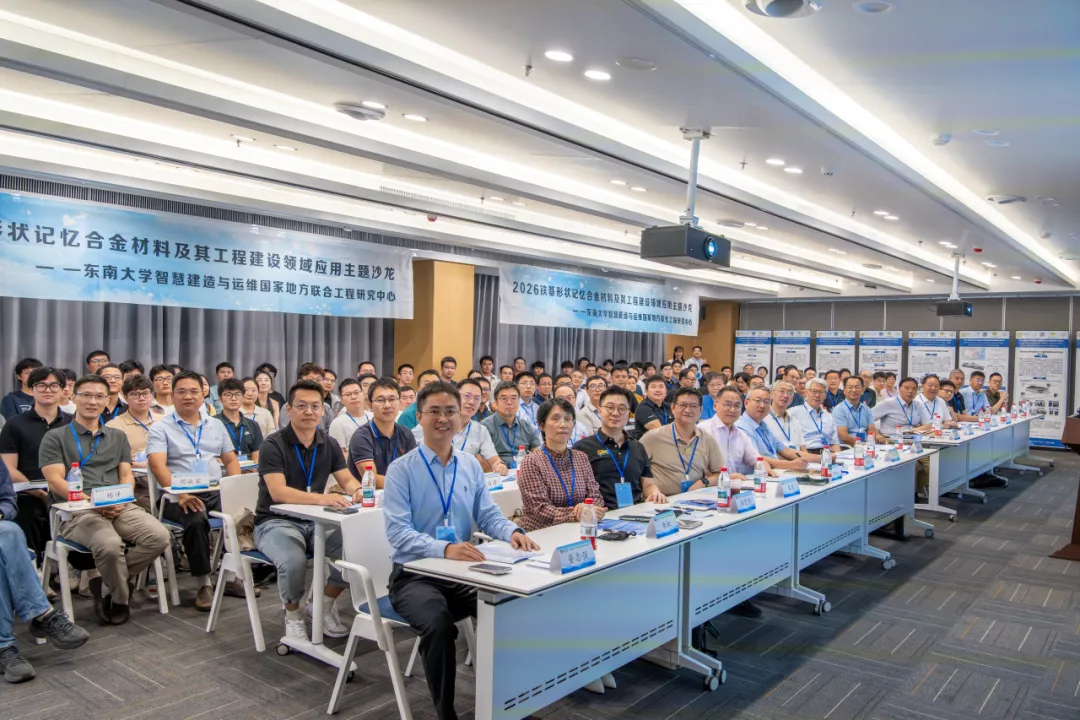
The salon focused on the research and development of Fe-SMA materials, self-prestressing technology, structural reinforcement, and performance enhancement. It featured discussion sections on material research and development and production processing, self-prestressing and structural reinforcement, engineering performance and engineering applications, and international research progress. Domestic experts, including Professor Wen Yuhua from Sichuan University and General Manager Pan Yijie from Fubai New Materials (Zhejiang) Co., Ltd., respectively introduced the development and application of new FeMnSi-based shape memory alloys and the practice of series material production and processing. Zhu Hong and Dong Zhiqiang from Southeast University, and Zhang Pu from Zhengzhou University, presented on differentiated paths for the large-scale application of Fe-SMA self-prestressing technology, innovative applications of self-prestressed Fe-SMA in actively enhancing thin-walled curved UHPC, and the self-prestressing effect of Fe-SMA stranded wire reinforced ECC composite panels. Li Yanwen from South China University of Technology and Ye Quanxi from Yanshan University focused on the fatigue crack resistance mechanism of steel structures reinforced by additive manufacturing-shaped Fe-SMA active bidirectional prestressing, and innovative applications of Fe-SMA materials in beam-column joint reinforcement and support construction. Wang Yuzhuo from Shandong Jianzhu University, Chen Shicai from Beijing University of Technology, and Yang Yang from Yangzhou University respectively shared research on enhancing the bending performance of Douglas fir glued laminated beams with Fe-SMA reinforcement, the fire resistance of reinforced concrete components with additional Fe-SMA, and the bending performance of Fe-SMA reinforced ballastless track slabs. Li Fei from Chongqing Jiaotong University introduced research on the design of composite material longitudinal tooth tube joints based on shape memory alloy pre-tightening. Overseas experts, including Professor Elyas Ghafoori from Leibniz University Hanover in Germany, reported on new research and applications of Fe-SMA in Germany and Europe. Associate Professor Donghyuk Jung from Korea University focused on the prestressing performance and thermodynamic behavior of Fe-SMA at high temperatures.
The roundtable discussion focused on issues such as the potential for material performance improvement, the price inflection point as production scales from hundred-ton to ten-thousand-ton levels, the next engineering application market, and the alignment of design-construction-acceptance standards. These discussions reflect that Fe-SMA is moving from technical feasibility discussions to practical issues related to large-scale applications.
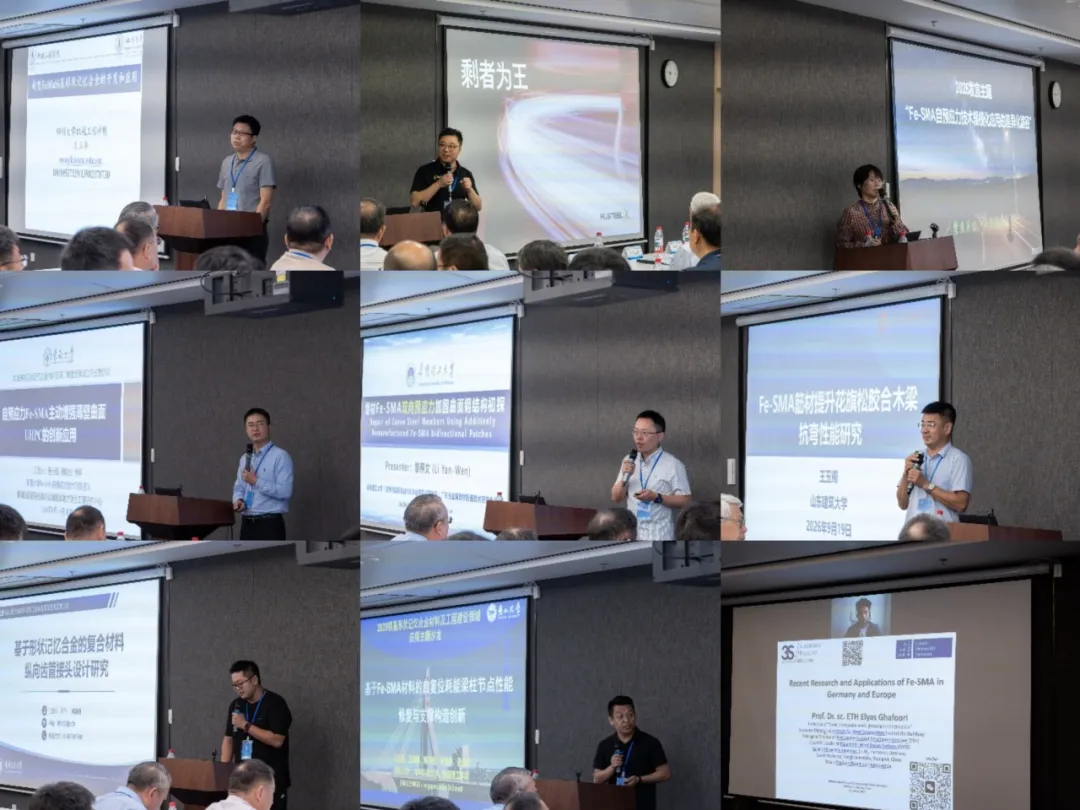
Note: Experts from both domestic and overseas delivered academic presentations at the 2026 Salon on the Application of Iron-based Shape Memory Alloy Materials and Their Engineering Construction (Photos provided by the conference organizing committee)
As an academic publishing and dissemination platform, "Modern Transportation and Metallurgical Materials" will leverage its strengths in academic publishing and dissemination, pay attention to new achievements and cases emerging from the salon, and support related special topic solicitation and review planning. At the same time, relying on journal resources and the council platform, it will promote communication and docking between material research and development, structural design, production and manufacturing, and engineering application units.
This salon has forged a consensus among various stakeholders in the Fe-SMA field, clarifying the development path from material performance enhancement, product technology development, to large-scale engineering application and standard system construction. The journal will continue to position itself at the intersection of metallurgical materials and transportation engineering, and leverage this academic exchange as an opportunity to further engage in collaborative industry-university-research-application efforts in the Fe-SMA field, providing platform support for innovative achievements to transition from academic exchange to engineering application.